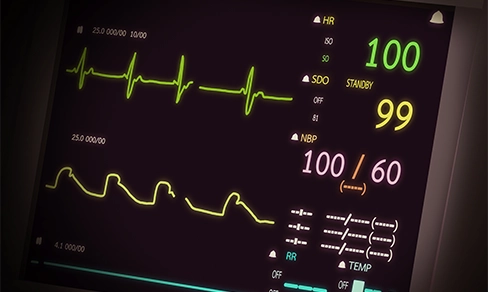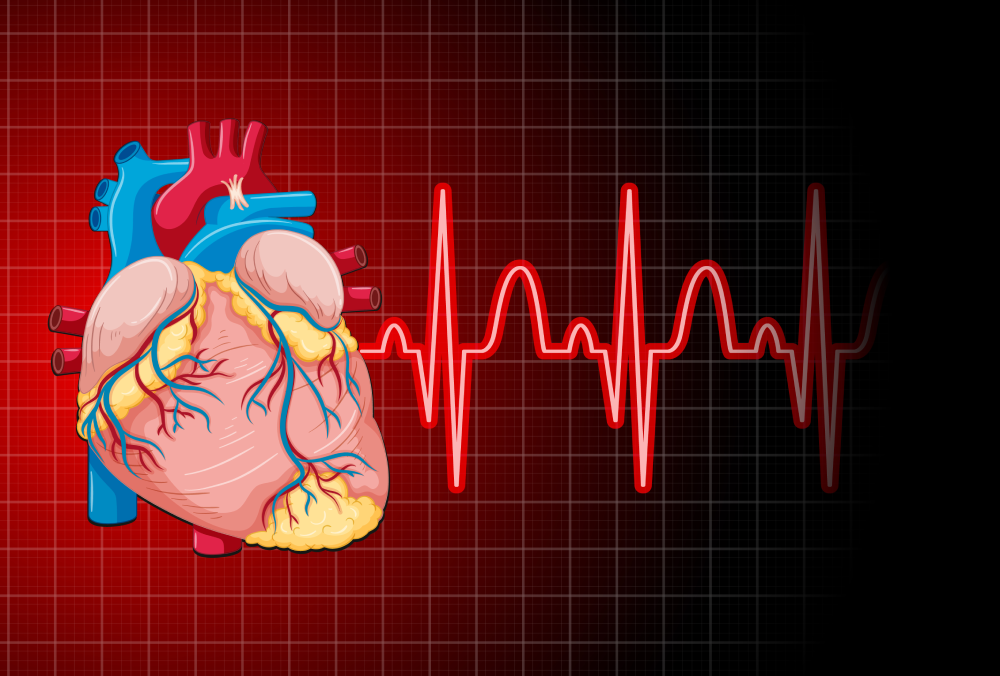
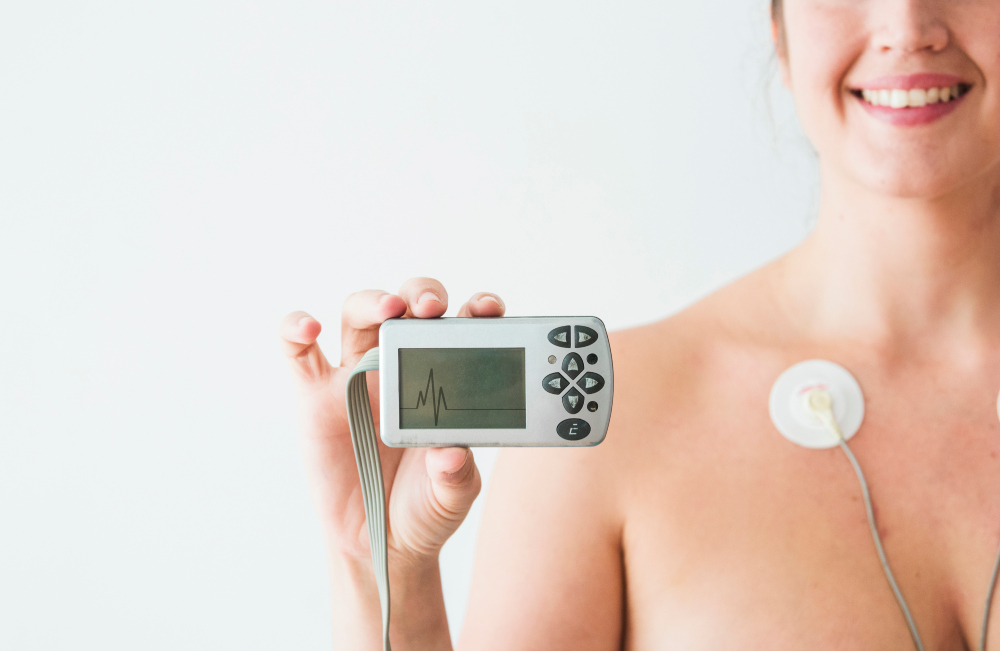
If your cardiologist has recommended a Holter monitor test, you might be wondering what’s involved and what to expect. A Holter monitor is essentially a type of electrocardiogram (ECG) – one of the most common tests in cardiology – but small enough to carry around with you. These little devices, sometimes referred to as 24-hour heart monitors, can help us detect irregular heartbeats that might not show up during a standard ECG. The good news is that Holter monitor tests are straightforward, safe and designed to fit around your normal daily routine. Below, we’ve answered some of the most common questions about the test – from wearing a Holter monitor to Holter monitor side effects – to help you understand how they work and what you can do to prepare for one.
What Is a Holter Monitor?
A Holter monitor is a small, wearable device that tracks your heart’s rhythm throughout your day-to-day activities, usually for 24 to 48 hours (though potentially longer). This extended recording period helps us spot any irregular heartbeats or heart problems that might be missed during a standard electrocardiogram (ECG) test at the clinic. If your doctor suggests this test, they are looking to understand more about your heart rhythm during your normal routine to ensure you get the most appropriate diagnosis and treatment.
How does a Holter monitor work
The Holter monitor uses small sensors (electrodes) that stick to your chest and link to a compact recording unit. This device tracks your heart’s electrical signals without interruption, recording each heartbeat and giving us detailed data about your heart rate and rhythm.
Traditional Holter monitors have wires running between the electrode patches and the device, and the monitor itself sits in a pouch worn on the waist or over the shoulder. More recent monitors, however, such as the ones we use here at Heart Rhythm Cardiologist, come as an all-in-one unit that attaches directly to your chest, without any wires. These modern devices are very light, small (about the size of a matchbox) and comfortable to wear. They won’t stop you from sleeping, washing or doing exercise. The new devices are also waterproof, so you can even take a shower (though you won’t be able to swim while wearing one).
A Holter may be self-requested if you have symptoms, or requested by a cardiologist, general practitioner or internal medicine physician (general physician).
What Does a Holter Monitor Test Detect?
One of the issues with heart rhythm problems and symptoms is that they don’t always happen all the time, day in and day out. Heart conditions like atrial fibrillation (AFib) and supraventricular tachycardia (SVT), for example, often come and go (doctors call this a “paroxysmal” disorder). What this means in testing terms is that a one-off ECG, which usually lasts between five and 40 minutes, may not pick up the problem you’re experiencing. So a Holter monitor gives us a longer window of time in which to capture the irregular heartbeats and understand what’s going on inside your heart.
We also use Holter monitors for things like:
- Detecting palpitations or ectopic beats in your heart
- Investigating unexplained symptoms, such as fatigue, dizzy spells or chest pain
- Clarifying the frequency, pattern and relationship of frequent ectopic beats to your symptoms
- Diagnosing specific heart rhythm conditions, such as SVT
- Assessing how your pacemaker is functioning
- Evaluating how well your medication is working
How to Prepare for Your Holter Monitor Test
Holter monitors are very simple and quick to fit; it usually takes just a few minutes to apply one. If you live locally, you can come into the clinic and we’ll do this for you. During the fitting, the team will explain how everything works and how to look after the device while you’re wearing it. If you live elsewhere in Ireland, we can arrange for the device to be posted to you. We’ll send you instructions explaining how to apply the monitor and look after it.
Do I Need to Do Anything Before the Test?
If you’re coming into the clinic for your fitting, you won’t need to do anything before the test. We’ll prepare your chest before fitting the device, but it’s helpful if you can wash the area beforehand and avoid applying any moisturiser, oils or powders before your fitting. It’s also a good idea to wear comfortable, loose-fitting clothing to your appointment, so we have easy access to your chest.
Will I Need to Stop Certain Medications?
Unless Dr Lyne or the team tell you otherwise, you should continue to take your regular medicines as you usually do. The primary reason for this is to observe how your heart functions under normal circumstances as you go about your everyday routines and activities.
What Happens When the Holter Monitor Is Fitted?
When you come in for your fitting, the team will make you comfortable and tell you more about the test and how the device works. The nurse or technician will then ask you to remove the top half of your clothes so they can prepare the skin on your chest before applying the monitor. This is important because we want to make sure there’s a good, clean connection with your skin so the monitor stays firmly in place and takes clear readings of your heart rhythm over the next few days. We use a gel or special type of medical tape to clean the area. If you have chest hair, we will shave any hair that might interfere with the contact. The nurse or technician will then place the monitor on your skin, either in the centre of your chest or on the left side below the clavicle (collarbone).
What Should I Expect While Wearing a Holter Monitor?
The main point of a Holter monitor test is to record the irregular rhythms in your heart whenever and however they happen. That means we’ll encourage you to go about your normal routine, as much as possible, when you leave the clinic. You can go for walks, climb stairs and carry out your daily routine as you normally would. The device records continuously, so we’ll be able to see whether any symptoms or irregular rhythms are happening when you work, eat, rest or exercise.
There are a few other things to bear in mind while you’re wearing the monitor:
- Magnets – you’ll need to avoid placing the device near an electric blanket, or close to a microwave that’s being used, or near other devices that produce strong electromagnetic fields (these can interfere with the device and its recording)
- Water – Although our Holter monitors can be worn in the shower, you’ll need to avoid swimming while wearing one
- Flying – While it’s safe to fly with a Holter monitor, security personnel are often unfamiliar with the device, so we typically recommend avoiding air travel while wearing one to prevent potential delays or complications at security checkpoints
- Journal – we may ask you to keep a diary/timeline of your activities during the test period and any symptoms you experience (things like dizziness or palpitations); this will give us a clearer picture of what’s happening alongside your heart’s electrical activity
- Device care – the team will show you how to look after the monitor and what to do if the sensors become loose or fall off during the test period
What Happens After the Test?
The team will explain when you need to end the test and bring the device back to the clinic. We will then download the activity that your device has recorded and analyse the data to identify any irregularities in your heart’s activity. We’ll contact you to arrange a follow-up appointment, where we can discuss potential treatment plans or follow-up tests.
How Long Does It Take to Get Results?
Once you’ve returned your device to us, we aim to review the data and report back to you as soon as possible. You can usually expect to have the results of your Holter monitor test within a week or two of the test period.
Are There Any Side Effects or Risks?
Wearing a Holter monitor is very safe, with no risks or discomfort involved. Occasionally, some patients find they get a very mild rash after wearing the sticky electrode patch for several hours. But the patches are hypoallergenic, so this is very rare. It’s not possible to get an electric shock from the device because it doesn’t generate any electricity; it simply detects your heart’s natural electrical signals.
Holter Monitor vs Other Heart Tests
By now, you’ve probably realised that Holter monitors are quite similar to some other common tests we use to trace and analyse heart activity. The main differences come down to how long the test lasts and where the device is located.
- Standard ECG – this procedure takes place in a clinic – either while you’re resting or during an activity (an Exercise ECG) – and only records your heart’s electrical activity at the time of the test
- Event monitor – this is a portable ECG that stays with you for a longer time than a Holter monitor, usually for 1-2 weeks or longer. Unlike a Holter, however, it records intermittently rather than continuously; you press a button to activate the recording when you start feeling symptoms (ie an “event”)
- Implantable loop recorder – this is a tiny ECG device that is inserted just underneath the skin of your chest. It’s designed to record electrical activity over a much longer time period, from weeks to months or even several years. It allows us to get a better long-term picture of what’s going on with your heart, and to capture symptoms (like fainting or palpitations) that are very infrequent.
When Should You See a Cardiologist About Heart Rhythm Symptoms?
If you think you’re experiencing problems with your heart rhythm – such as unexplained dizziness, fainting or palpitations – it’s a good idea to have yourself checked by a doctor. The symptoms you’re getting may not be related to your heart at all, but it’s better to seek help if you’re concerned. If your doctor thinks your symptoms need further investigation, they may refer you to a cardiologist for more tests.
The HSE recommends you see a GP if you’re getting chest pain that comes and goes (or that goes away quickly but still worries you), if you notice a sudden change in your heartbeat, or if your heart rate is often lower than 60 or above 100 beats per minute.
Some heart symptoms should be treated as a medical emergency. Call 112 if you have sudden chest pain that spreads to your arms, back, neck or jaw; makes your chest feel tight or heavy; also started with shortness of breath, sweating and feeling or being sick (HSE Ireland); lasts more than 15 minutes.
Concerned about skipped beats or other heart and chest symptoms?
If you’re worried about your heart – or concerned for a friend or loved one who’s been getting unusual symptoms – we’re here to help. You can book an appointment with Dr Lyne and the Heart Rhythm Cardiologist team quickly and easily here on the website. You can also call or email us for a quick response.
Have questions about Cardiac Ablation? Get in touch with Dr Lyne at Heart Rhythm Cardiologist.
Common Questions About What to Expect During a Holter Monitor Test
It’s named after the man who invented the device. Norman J. Holter was an experimental physicist who developed a portable version of the ECG at his research laboratory in Montana during the 1950s. It first became commercially available in 1962 and soon became a standard feature of cardiology treatment.
Heart rhythm problems don’t always happen constantly, so a standard ECG that lasts just a few minutes might miss the irregular beats you’re experiencing. A Holter monitor provides a longer window to capture what’s happening with your heart.
A Holter monitor records continuously for 24 to 48 hours, while an event monitor stays with you for longer (usually 1-2 weeks or more) but only records when you press a button to activate it during symptoms.
Holter monitors help us detect irregular heartbeats like atrial fibrillation (AFib), palpitations, and ectopic beats, and they can help investigate symptoms like dizziness, fatigue or chest pain. We also use them to check how well your pacemaker or heart medications are working.
When you come into the clinic, a technician or cardiologist will attach small sticky electrode patches to your chest – usually 3-5 in total, depending on the device. The monitor itself is about the size of a pack of playing cards and fits into a small pouch you can wear over your shoulder or on a belt.
There’s very little preparation needed, though you may want to shower beforehand since you’ll need to keep the monitor dry while wearing it. Avoid applying oils, lotions, or powders to your chest before the fitting, and wear comfortable, loose-fitting clothing to your appointment.
Yes – in fact we will usually encourage you to carry on with your usual routine as much as possible. You can walk, climb stairs, work and do your daily activities so we can see how your heart behaves during everyday life.
You’ll need to keep the device dry and avoid getting it wet, and stay away from electric blankets or devices, such as microwaves when in operation, that produce strong electromagnetic fields.
No, there’s no risk of electric shock because the Holter monitor doesn’t generate any electricity; it simply detects your heart’s natural electrical signals.
Wearing a Holter monitor is very safe with virtually no risks. Occasionally, some people may develop a mild skin rash from the adhesive electrodes, but this is fairly uncommon.
We’ll download and analyse the data recorded by your device to identify any irregularities in your heart’s activity. Then we’ll contact you to arrange a follow-up appointment where we can discuss the results and any potential treatment plans.