A pacemaker implantation procedure is a relatively common procedure to perform in all cardiology units. With an ageing population current implantation rates are set to increase significantly. Dr Lyne has performed a new type of pacemaker insertion procedure, the first case in Ireland and the UK.
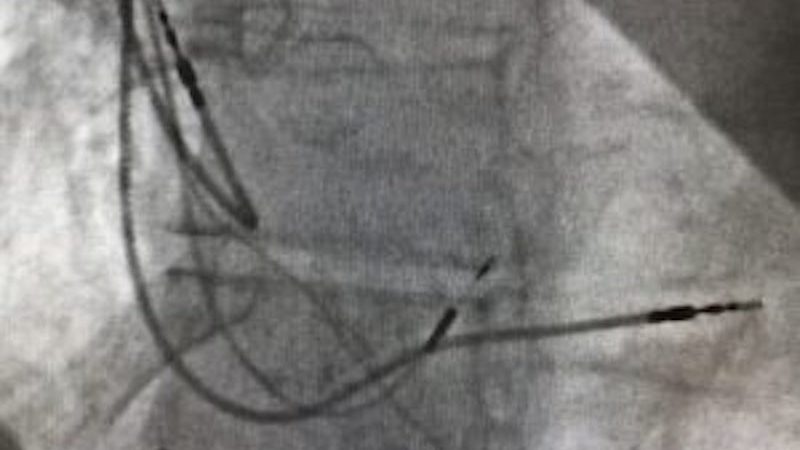
Currently, during a conventional permanent pacemaker insertion procedure, a pacing wire or lead is placed through a vein into the lower chambers of the heart, usually the right ventricle. From the tip of this lead the heart is electrically activated to contract. However, in some patients, it may adversely affect the function of the heart over time.
Recent advances in pacemaker implantation techniques include a new type of procedure called conduction system pacing. This new procedure of left bundle branch pacing is a specific conduction system pacing procedure. Because it has the potential to maintain the normal electrical pattern of conduction through the heart, it may protect the function of the heart in the longterm, preventing deterioration that can include heart failure.
Clinical studies have shown that left bundle branch pacing can produce strong electrical resynchronisation of the heart and may improve cardiac function compared with traditional pacing approaches.
Likewise, research into hybrid pacing approaches that combine left bundle branch pacing with coronary venous pacing suggests this strategy may further improve resynchronisation in selected patients.
To learn and refine the technique Dr Lyne visited Dr Huang and his team at the First Affiliated Hospital, Wenzhou, China who have significant experience in the field.
Further reading from Dr Lyne:
Conduction system pacing, a European survey: insights from clinical practice – PubMed